

What is Sillage + 10 Other Fragrance Terms You Should Know
Sillage is the alluring scent trail left by someone wearing perfume after they walk by. Not to be confused with the naturally occurring pheromones in the body, sillage is artificial. This “fragrance trail” is stronger when perfume has first been applied and slowly dilutes with time. Really, sillage is the reason perfume is worn in the first place.
Origins of Sillage or the “Fragrance Trail”
Originating from the French term for “wake” or “trail”, the term sillage has only gained recent popularity in the American lexicon. Pronounced “see-yazh”, it has picked up steam thanks to fashion publications who use it to compare and contrast different fragrance types. The term can be used to describe the projection of scent for both perfume and cologne.
Perfume Vocabulary and Other Fragrance Terms
When searching for a new fragrance, it’s important to know the language associated with perfume in order to pinpoint what will work best for an individual’s unique body oils and pheromones. Since you’re now familiar with sillage, we have listed a few more common fragrance terms used by perfumers below.

1. Note
Notes are the different scents a perfume gives off. Each fragrance holds three types of notes: head (also called top notes), heart (middle) and base notes.
Head notes are the initial and strongest scents of a perfume. Usually, they are what people think of when they associate a “signature scent” to a fragrance, and only last for about five to 10 minutes. Heart notes are fuller, softer versions of the head notes that last for around 20 minutes to an hour.
Heart notes help transition a fragrance’s aroma into its final scent phase — base notes. The main body of a fragrance’s scent, base notes occur once a perfume is fully set and can last 24 hours or more.
2. Tone
Tones are the accents or flavors a fragrance gives off. Where notes are an overarching character of a fragrance, tones are the underlying smells that combine to make a single note (just like with music).
Warm, cold, citrus and fern are all types of tones one may encounter when looking for a perfect scent. Regarded as the main “themes” of a perfume, these parts of the olfactory experience are crucial in determining the scent category for a fragrance.
3. Depth
The best fragrances are ones with depth. Characterized as the ability to hold tones throughout all three note phases, depth indicates that the fragrance is of a higher quality. Although usually priced higher than other perfumes, fragrances with depth require fewer sprays and carry a stronger, more robust smell for their entire application life.
4. Concentration
Perfume concentration refers to the strength of a fragrance. It can be broken into five categories: parfum, eau de parfum, eau de toilette, eau de cologne, and eau fraiche. Parfum’s concentration is the highest, meaning it has the highest perfume-oil-to-alcohol ratio, with eau de toilette having the next highest and so-on. The higher a fragrance’s concentration, the stronger its scent profile is and the longer it will last on one’s skin.

5. Dry Down
A perfume’s dry down scent is unique to each person. Dry down occurs during the base note phase and is caused by the drying and mixing of a fragrance with a person’s natural oils. This means that a perfume that smells fantastic on one individual might smell completely different on another. Usually, the dry down is the longest lasting part of a perfume’s scent life. Thus, it’s important for individuals to find their perfect fragrance.
6. Aldehydes
Aldehydes are a naturally occurring compound found in the pleasant scents of things like flowers and orange peels. When it comes to perfume, however, they are usually made in a laboratory. These synthetic aldehydes are used to heighten a fragrance’s sillage and dampen a smell’s “realism”.
For example, aldehydes are the reason why a rose-scented perfume doesn’t smell exactly like a bouquet of roses, but rather has an overall, fresh-smelling scent. The compounds were made popular for perfume-making by the timeless scent, Chanel N°5.
7. Gourmand
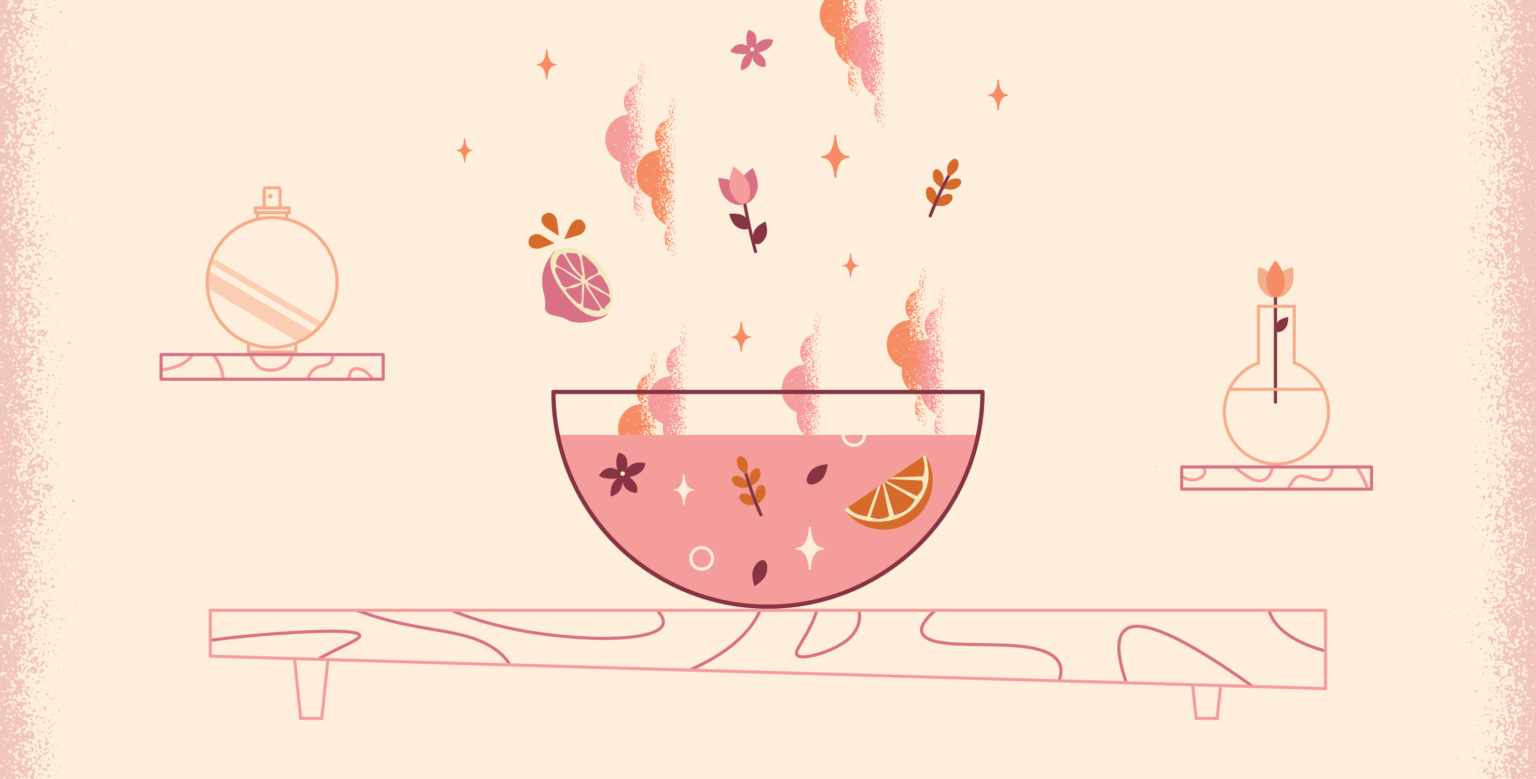
Another term originating in France, a “gourmand” fragrance is one that contains a notable amount of food-based scents. Vanilla, cinnamon and honey-scented perfumes all fall under this category. These fragrances are especially important to blend properly with one’s specific body scent and oil profile. If improperly executed, you could smell like an unpleasant food.
8. Fougère
Fougère is used to describe fragrances with earthy, fern-like notes. It’s another word with French origin. These types of fragrances generally have flowery or fresh tones, making them ideal for warmer summer and early fall months. One can generally find ingredients like lavender or pine in fougère perfumes.
9. Oriental
Oriental perfumes are rich, warm and sensual. Usually thought of as aphrodisiac perfumes, these fragrances can have scent profiles consisting of dark chocolate, wood or similar tones. Oriental perfumes are usually worn at night due to their sensual, alluring nature. These scents are also a great choice for the cold winter months.
10. Accord
An accord is the fundamental makeup of a fragrance. Consisting of a note “recipe,” a typical fragrance will have three to four notes which make up its accord. The accord of a prospective perfume is constantly tinkered with until a perfect blend is reached. Only when a perfumer is satisfied with an accord will the fragrance be put into production.
Understanding fragrances and their glossary is a complicated, yet essential endeavor. Perfumes and colognes are unique to each person and navigating the many available scents can be overwhelming. The process of finding a new scent can be expedited immensely if the correct terminology is used, which is why it’s important to be familiar with these terms.
Ready to find the right perfume? Browse our fragrances and try out a few you believe are a good fit. Enjoy the process now that you’re an expert on perfume terms!


Get the best of FragranceX delivered straight to your inbox
Related Posts
12 Best Lattafa Perfumes 2026: Khamrah, Yara & More
The 12 best Lattafa perfumes of 2026 — from viral Khamrah and Yara to rich ouds...

Best Perfume 2026: 15 Iconic Scents for Every Occasion
The 15 best perfumes for 2026 — from Dior J'adore to Tom Ford Black Orchid. Fresh,...
Best Colognes for Men 2026: 15 Iconic Scents Every Guy Should Have
From Dior Sauvage to Tom Ford Oud Wood — the 15 best colognes for men in...